
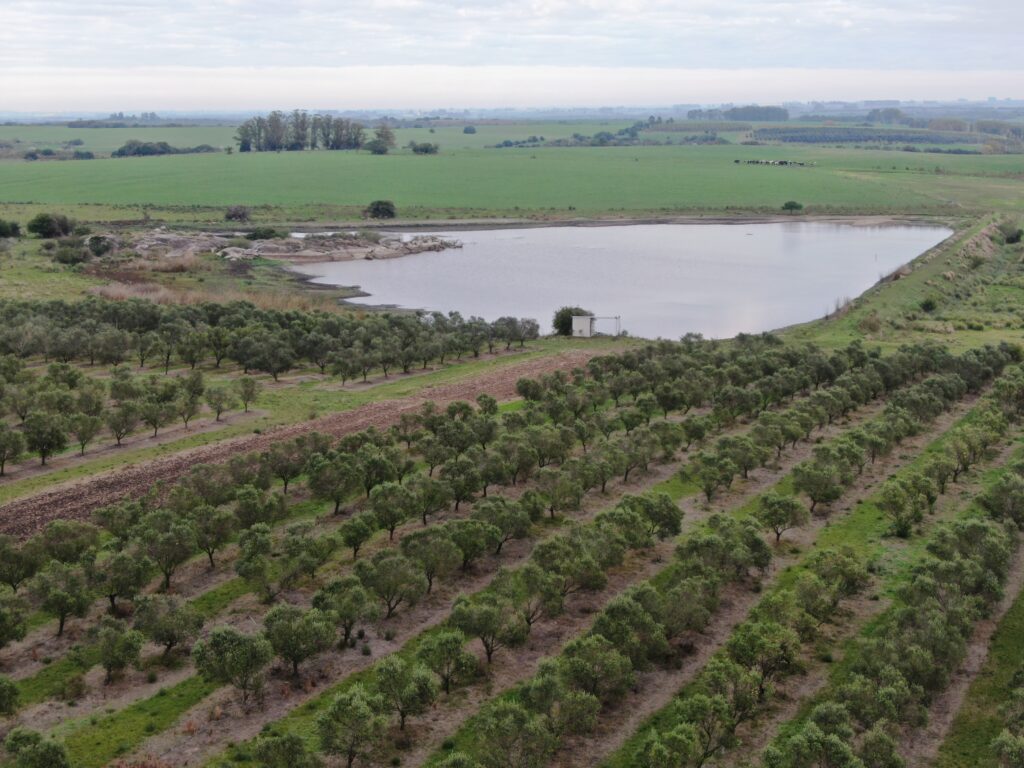
Uruguay has never been known as a coffee-producing country. Its fertile plains are home to cattle, soybeans, rice, and forestry—but not coffee. Yet recent studies suggest that this may change.
Due to climate change, global coffee production is expected to decline in many traditional countries. By 2050, regions like southern Brazil, Colombia, and Vietnam could lose up to 50% of their suitable coffee land . At the same time, countries further south—like Uruguay—may become increasingly suitable for coffee farming .
For forward-looking U.S. investors, Uruguay coffee represents a long-term, speculative opportunity in farmland diversification.
Global Coffee Demand and Shifting Regions
In 2023, the world produced 3% less coffee than it consumed, with Asia’s growing consumption widening the gap.
Climate change threatens traditional producers like Brazil, Vietnam, Colombia, and Indonesia, where up to 50% of current coffee land may be unsuitable by 2050.
As a result, new regions—including parts of Uruguay, Argentina, and the U.S. Gulf Coast—are projected to become coffee-friendly.
This shift positions Uruguay coffee as a long-term opportunity for forward-looking investors.
Why Uruguay Could Become Suitable for Coffee
Climate Trends
Increasing minimum winter temperatures make Uruguay’s southern latitude more favorable for crops like coffee.
Average rainfall in Uruguay (≈1200 mm annually) already supports diverse agriculture.
Predictable seasons and mild winters could allow adaptation of coffee varieties.
Land Availability
Uruguay is already a global leader in livestock and grains, with vast farmland areas classified for high productivity.
Coffee would likely integrate into existing diversified farming systems (mixed farms with cattle, grains, forestry).
Challenges of Uruguay Coffee Farming
Start-up risks: Coffee plants take 3–4 years to yield harvests, requiring upfront investment before cash flow begins.
Soil and slope requirements: Not all farmland is suitable—coffee requires specific pH, drainage, and altitude considerations.
Market positioning: Uruguay would be a new entrant, competing against established exporters with brand recognition.
Not on a commercial scale. Uruguay is not a traditional coffee producer, but climate projections suggest it could become suitable in the future.
Rising minimum winter temperatures due to climate change may allow coffee plants to thrive where it was previously too cold.
Typically 3–4 years before yielding their first commercial harvest.